Embark on a journey into the world of high-yield bond investments, where opportunities for lucrative returns meet strategic risk management, creating a dynamic landscape for investors.
Delve deeper into the realm of high-yield bonds to uncover their unique characteristics and potential benefits that set them apart in the realm of fixed-income securities.
Introduction to High-yield bond investments
High-yield bonds, also known as junk bonds, are fixed-income securities issued by companies or entities with lower credit ratings compared to investment-grade bonds. These bonds offer higher yields to investors in exchange for taking on a higher level of risk.
Differences from Investment-grade bonds
High-yield bonds are typically issued by companies with below-average credit ratings, making them riskier investments compared to investment-grade bonds. The lower credit quality of high-yield bonds results in higher interest rates to compensate investors for the increased risk.
Risk-return profile of High-yield bond investments
Investing in high-yield bonds can provide investors with the potential for higher returns than investment-grade bonds. However, the higher returns come with increased risk of default. It is essential for investors to carefully assess their risk tolerance and investment goals before considering high-yield bond investments.
Typical issuers and industries of High-yield bonds
High-yield bonds are commonly issued by companies in industries such as technology, healthcare, energy, and telecommunications. These industries often have higher levels of debt and operating risks, leading to lower credit ratings and the need to issue high-yield bonds to raise capital.
Benefits of high-yield bond investments
Investing in high-yield bonds offers several advantages compared to other fixed-income securities. These bonds, also known as junk bonds, have the potential to provide higher returns to investors due to their higher interest rates.
Potential for Higher Returns
High-yield bonds typically come with higher interest rates compared to investment-grade bonds. This means that investors have the opportunity to earn greater returns on their investment. While high-yield bonds may carry a higher risk of default, the potential for increased returns attracts many investors looking to boost their portfolio performance.
Diversification and Risk Management
Including high-yield bonds in a diversified investment portfolio can help manage risk. These bonds have a low correlation with other asset classes, such as stocks and investment-grade bonds, which means they can act as a hedge against market volatility. By diversifying with high-yield bonds, investors can potentially reduce overall portfolio risk while still aiming for higher returns.
Risks associated with high-yield bond investments
High-yield bond investments come with certain risks that investors need to consider before allocating their funds. These risks can impact the performance and returns of high-yield bonds, making it essential for investors to understand and manage them effectively.
Credit Risk
Credit risk is one of the key risks associated with high-yield bond investments. These bonds are issued by companies with lower credit ratings, which implies a higher probability of default. In case the issuing company faces financial distress or goes bankrupt, investors may face the risk of losing a significant portion of their investment.
Interest Rate Risk
Interest rate risk is another important factor to consider when investing in high-yield bonds. These bonds are sensitive to changes in interest rates, and a rise in interest rates can lead to a decrease in bond prices. As a result, investors may experience capital losses if they need to sell their high-yield bonds before maturity in a high-interest-rate environment.
Liquidity Risk
Liquidity risk is also a concern for investors in high-yield bonds. These bonds may have lower trading volumes compared to investment-grade bonds, making it challenging to buy or sell them at desired prices. In times of market stress or economic uncertainty, liquidity risk can exacerbate and lead to difficulties in exiting positions without incurring significant costs.
Impact of Economic Conditions
Economic conditions play a crucial role in determining the performance of high-yield bonds. Factors such as GDP growth, inflation rates, and unemployment levels can influence the creditworthiness of high-yield bond issuers. During economic downturns or recessions, the default rates of high-yield bonds tend to increase, impacting the overall returns of investors.
Importance of Credit Analysis
Conducting thorough credit analysis is vital before investing in high-yield bonds. This analysis involves assessing the financial health, debt levels, industry trends, and market conditions of bond issuers. By performing comprehensive credit analysis, investors can better understand the risks associated with high-yield bonds and make informed investment decisions to mitigate potential losses.
Strategies for investing in high-yield bonds
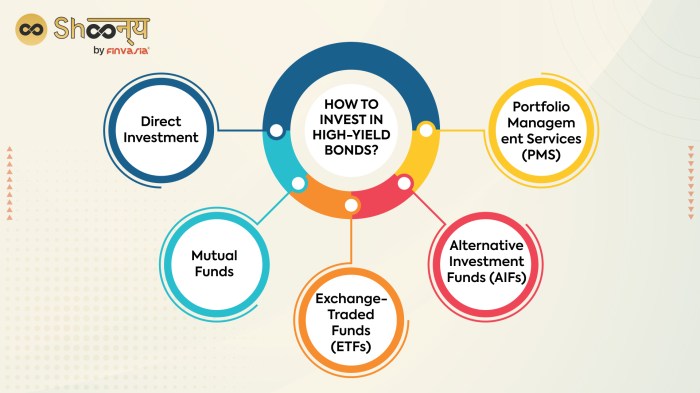
Investors use various strategies to incorporate high-yield bonds into their portfolios, depending on their risk tolerance and investment goals. Active management and passive management are two common approaches in high-yield bond investing, each with its own set of advantages and drawbacks. Additionally, considerations such as duration, yield curve positioning, and credit quality play a crucial role in determining the success of high-yield bond investment strategies.
Role of Active Management vs. Passive Management
Active management involves a hands-on approach where fund managers actively buy and sell high-yield bonds in an attempt to outperform the market. This strategy requires in-depth research, market timing, and a good understanding of credit risk. On the other hand, passive management involves investing in high-yield bond index funds or ETFs to replicate the performance of a specific index. Passive management is often favored by investors looking for lower costs and less frequent portfolio turnover.
Duration, Yield Curve Positioning, and Credit Quality Considerations
Duration is a key factor in high-yield bond investing, as it measures the sensitivity of bond prices to changes in interest rates. Investors can adjust the duration of their portfolio to manage interest rate risk effectively. Yield curve positioning refers to the allocation of high-yield bonds across different maturities on the yield curve, depending on market conditions and outlook. Credit quality considerations involve analyzing the creditworthiness of high-yield bond issuers to assess default risk and potential returns.
Bond Investment Overview
Bonds are fixed-income securities that represent a loan made by an investor to a borrower, typically a government or corporation. In return, the borrower agrees to pay a fixed amount of interest over a specified period and repay the initial investment amount at the bond’s maturity date.There are several types of bonds available in the market, including government bonds issued by national governments, corporate bonds issued by companies to raise capital, municipal bonds issued by local governments to fund public projects, and high-yield bonds, which offer higher interest rates but come with higher risk due to the creditworthiness of the issuer.The relationship between bond prices and interest rates is inverse – when interest rates rise, bond prices fall, and vice versa.
This means that changes in interest rates can affect the value of a bond investment and its overall return. Investors must consider this relationship when deciding to invest in bonds.
Government Bonds
Government bonds are issued by national governments to fund public spending or manage debt. They are considered low-risk investments due to the backing of the government, but they typically offer lower returns compared to other types of bonds.
- Government bonds are often used as a safe haven investment during times of economic uncertainty.
- They are generally less volatile than other types of bonds, providing a stable source of income for investors.
Corporate Bonds
Corporate bonds are issued by companies to raise capital for various purposes, such as expansion, acquisitions, or debt refinancing. They offer higher returns than government bonds but come with a higher risk of default.
- Corporate bonds are rated by credit agencies based on the issuer’s creditworthiness, with higher ratings indicating lower risk.
- Investors can choose from investment-grade corporate bonds or high-yield bonds, depending on their risk tolerance and return expectations.
Municipal Bonds
Municipal bonds are issued by local governments to finance infrastructure projects, public services, or other initiatives. They are exempt from federal taxes and may also be exempt from state and local taxes, making them attractive to investors in high tax brackets.
- Municipal bonds are typically considered low-risk investments due to the stable revenue streams of local governments.
- They offer tax advantages that can enhance the overall return for investors, especially those seeking tax-efficient income.
High-yield Bonds
High-yield bonds, also known as junk bonds, are issued by companies with lower credit ratings or higher risk of default. They offer higher interest rates to compensate investors for the increased risk.
- High-yield bonds can provide higher returns than other types of bonds, but they also come with a higher risk of default.
- Investors in high-yield bonds must carefully assess the creditworthiness of the issuer and diversify their bond portfolio to manage risk effectively.
In conclusion, high-yield bond investments offer a compelling avenue for investors seeking to enhance their portfolio returns while effectively managing associated risks, making them a valuable asset in today’s financial landscape.
Expert Answers
What are the typical industries that issue high-yield bonds?
High-yield bonds are commonly issued by companies in sectors such as energy, telecommunications, and healthcare, seeking to raise capital at higher interest rates.
How do economic conditions affect high-yield bond performance?
Economic factors like inflation, interest rates, and overall market conditions can influence the credit quality of high-yield bonds, impacting their returns.
What role does credit analysis play in high-yield bond investing?
Conducting thorough credit analysis helps investors assess the financial health and creditworthiness of high-yield bond issuers, mitigating potential risks.