Embark on a journey to explore the world of foreign bonds with this detailed guide on how to invest in them. Discover the intricacies and opportunities that come with venturing into international bond markets.
Learn about the different types of foreign bonds, key considerations before investing, and essential tips for managing risks effectively.
Introduction to Foreign Bonds
Foreign bonds are debt securities issued by a foreign entity in a country different from where the investor resides. These bonds differ from domestic bonds in terms of currency, interest rates, and geopolitical risks. Investing in foreign bonds can provide diversification benefits, higher yields, and exposure to different markets. Some popular foreign bond markets include the Eurozone, Japan, and emerging markets like Brazil and China.
Benefits of Investing in Foreign Bonds
- Diversification: Investing in foreign bonds can help spread risk across different markets and currencies, reducing overall portfolio risk.
- Higher Yields: Foreign bonds may offer higher yields compared to domestic bonds, providing opportunities for increased returns.
- Currency Exposure: Investing in foreign bonds allows investors to gain exposure to different currencies, potentially benefiting from currency fluctuations.
- Market Opportunities: Foreign bond markets can offer unique investment opportunities that may not be available in domestic markets.
Popular Foreign Bond Markets
- Eurozone: The Eurozone bond market includes countries like Germany, France, and Italy, offering a wide range of bond options for investors.
- Japan: Japanese bonds are known for their stability and liquidity, attracting investors seeking a safe haven for their investments.
- Emerging Markets: Countries like Brazil and China present growth opportunities for investors looking to diversify their portfolios and tap into emerging economies.
Types of Foreign Bonds
Foreign bonds come in various types, each with its own set of characteristics and risks. Understanding the differences between these types can help investors make informed decisions when investing in foreign bonds.
Government Bonds
Government bonds are issued by foreign governments to raise capital. These bonds are generally considered low-risk as they are backed by the government’s ability to tax its citizens or print more money to repay bondholders. Examples of well-known foreign government bond issuers include the Japanese Government Bonds (JGBs) and German Bunds.
Corporate Bonds
Corporate bonds are issued by foreign corporations to raise funds for various purposes, such as expansion or debt refinancing. These bonds typically offer higher yields compared to government bonds but come with higher risks. The creditworthiness of the issuing corporation plays a crucial role in determining the risk associated with corporate bonds. Examples of well-known foreign corporate bond issuers include Nestle, Toyota, and Samsung.
Emerging Market Bonds
Emerging market bonds are issued by countries with developing economies. These bonds offer higher yields to compensate for the increased risk associated with investing in emerging markets. Examples of well-known foreign emerging market bond issuers include Brazil, Russia, India, China (BRIC) countries.
Municipal Bonds
Municipal bonds are issued by local governments or municipalities in foreign countries to fund infrastructure projects or other public initiatives. These bonds are generally considered low-risk due to the backing of the local government. Examples of well-known foreign municipal bond issuers include the Greater London Authority and the City of Tokyo.
Factors to Consider Before Investing
When evaluating foreign bond investments, there are several key factors to consider that can significantly impact your investment decisions. Understanding these factors is crucial for making informed choices and managing risks effectively. Factors such as credit risk, currency risk, interest rates, economic conditions, and the importance of diversification play a vital role in shaping your foreign bond portfolio.
Credit Risk and Currency Risk
One of the primary factors to consider when investing in foreign bonds is credit risk. This refers to the risk of the issuer defaulting on their bond payments. It is essential to assess the creditworthiness of the foreign entity issuing the bonds to determine the level of risk involved.
Currency risk is another critical factor to consider, especially when investing in bonds denominated in a foreign currency. Fluctuations in exchange rates can impact the value of your investment, leading to potential gains or losses depending on how the currencies perform relative to each other.
Interest Rates and Economic Conditions
Interest rates and economic conditions in the foreign country can also have a significant impact on your bond investments. Changes in interest rates can affect bond prices, with rising rates leading to lower bond values and vice versa. It is essential to monitor interest rate movements and economic indicators to anticipate potential changes in bond prices.
Importance of Diversification
Diversification is key to managing risk in a foreign bond portfolio. By investing in bonds from different countries, industries, and issuers, you can spread your risk and reduce the impact of any single investment performing poorly. Diversification helps protect your portfolio from localized risks and enhances its overall stability.
How to Invest in Foreign Bonds
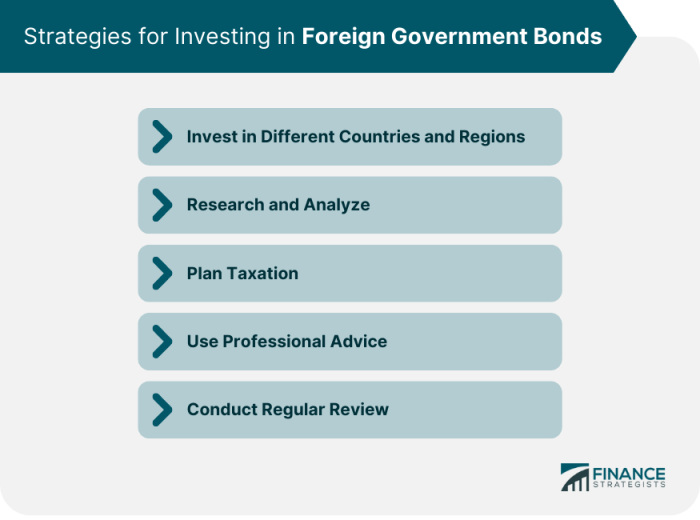
Investing in foreign bonds can be a lucrative opportunity for diversifying your investment portfolio. Here are the steps involved in purchasing foreign bonds through a broker or financial institution.
Steps to Purchase Foreign Bonds
- Open an international brokerage account: Choose a reputable brokerage firm that offers access to foreign bond markets.
- Research and select foreign bonds: Conduct thorough research on different foreign bonds and choose the ones that align with your investment goals.
- Place your order: Work with your broker to place an order for the foreign bonds you wish to purchase.
- Consider currency exchange: Keep in mind that currency exchange rates can impact your returns on foreign bond investments.
- Monitor your investments: Stay informed about the performance of your foreign bonds and make adjustments as needed.
Role of Currency Exchange in Foreign Bond Investments
Currency exchange plays a crucial role in foreign bond investments as it can affect the overall return on investment. Fluctuations in exchange rates can either increase or decrease the value of your foreign bond holdings. It is essential to monitor currency movements and consider hedging strategies to mitigate currency risk.
Tips for Managing Risks Associated with Foreign Bond Investments
- Diversify your investments: Spread your investment across different foreign bonds to reduce the impact of potential losses.
- Stay informed: Keep yourself updated on international economic and political developments that may impact foreign bond markets.
- Consider hedging strategies: Utilize currency hedging techniques to protect your investments from adverse currency movements.
- Consult with a financial advisor: Seek guidance from a professional advisor to help navigate the complexities of foreign bond investments.
Bond Investment
Investing in bonds is a crucial component of a well-rounded investment portfolio. Bonds offer a steady stream of income through regular interest payments, making them a reliable source of passive income for investors. Additionally, bonds provide diversification benefits, helping to reduce overall portfolio risk by balancing out the volatility of stocks.
Characteristics of Bonds vs. Stocks
- Bonds are debt securities issued by governments or corporations, representing a loan that the investor provides in exchange for regular interest payments and the repayment of the principal amount at maturity.
- Stocks, on the other hand, represent ownership in a company and provide returns through capital appreciation and dividends.
- Bonds are considered less risky than stocks since bondholders have a higher claim on assets in case of bankruptcy. However, they offer lower returns compared to stocks to compensate for the lower risk.
Role of Bonds in Hedging Market Volatility
Bonds play a crucial role in hedging against market volatility by providing a cushion during times of economic uncertainty or stock market downturns. When stock prices fall, bond prices tend to rise as investors seek safer assets, balancing out the overall performance of the portfolio. This inverse relationship between stocks and bonds helps to reduce the overall risk exposure and volatility of the investment portfolio.
In conclusion, investing in foreign bonds can offer diversification and unique opportunities for savvy investors. By understanding the nuances of this market, you can make informed decisions to grow your investment portfolio.
FAQ Corner
What are the main risks associated with investing in foreign bonds?
Foreign bond investments come with risks such as currency fluctuations, political instability in the issuing country, and potential changes in regulations.
How can one mitigate currency risk when investing in foreign bonds?
Investors can consider hedging strategies or diversifying their bond portfolio across different currencies to offset currency risk.