Exploring the world of Bond ETFs for investors, this introduction sets the stage for an insightful journey into the realm of bond investments.
Diving deeper into the nuances of Bond ETFs, this guide aims to provide clarity and understanding for both novice and experienced investors alike.
Overview of Bond ETFs
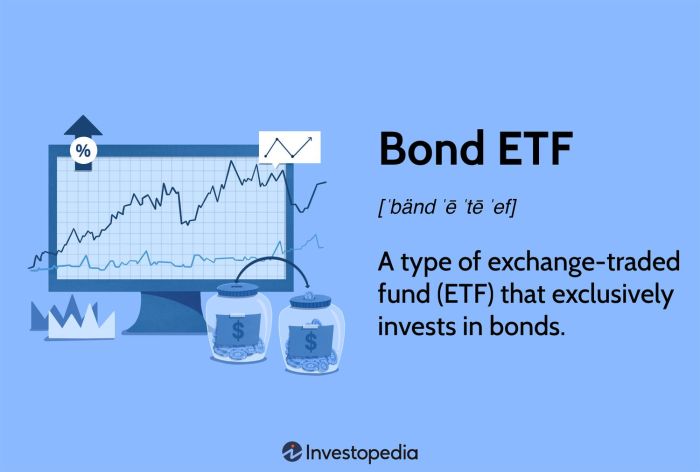
Bond ETFs, or exchange-traded funds, are investment funds that invest in a portfolio of bonds and are traded on stock exchanges. They differ from individual bonds in that they offer investors a way to gain exposure to a diversified portfolio of bonds in a single trade, rather than having to buy individual bonds separately.
Benefits of Investing in Bond ETFs
- Diversification: Bond ETFs provide investors with exposure to a wide range of bonds, reducing the risk associated with investing in individual bonds.
- Liquidity: Bond ETFs can be bought and sold on stock exchanges throughout the trading day, providing investors with liquidity that individual bonds may not offer.
- Low Cost: Bond ETFs typically have lower management fees compared to mutual funds, making them a cost-effective investment option.
- Transparency: Bond ETFs disclose their holdings regularly, allowing investors to know exactly what bonds they are investing in.
Comparison to Other Investment Options
- Individual Bonds: Bond ETFs offer diversification and liquidity that individual bonds may not provide. Additionally, investing in Bond ETFs allows for smaller investment amounts compared to buying individual bonds.
- Mutual Funds: Bond ETFs typically have lower fees and are more tax-efficient compared to mutual funds. They also offer intraday trading, unlike mutual funds that are only traded at the end of the day.
- Stocks: Bond ETFs provide investors with exposure to the fixed income market, offering diversification benefits to a stock-heavy portfolio.
Types of Bond ETFs
When it comes to Bond ETFs, investors have a variety of options to choose from based on their risk tolerance and investment goals. Understanding the different types of Bond ETFs and their associated risk factors is crucial for making informed investment decisions.
Government Bonds
Government bond ETFs invest in debt securities issued by governments. These bonds are considered to be the safest option as they are backed by the government’s ability to tax its citizens. The risk associated with government bond ETFs is relatively low compared to other types, making them suitable for conservative investors seeking stability in their portfolios.
Corporate Bonds
Corporate bond ETFs invest in debt securities issued by corporations. These bonds typically offer higher yields than government bonds but come with a higher level of risk. Corporate bond ETFs are subject to the credit risk of the issuing company, meaning there is a chance of default. Investors with a higher risk tolerance may consider corporate bond ETFs to potentially earn higher returns.
Municipal Bonds
Municipal bond ETFs invest in debt securities issued by state and local governments. These bonds are exempt from federal taxes and, in some cases, state taxes, making them attractive to investors in higher tax brackets. While municipal bond ETFs are generally considered safer than corporate bonds, they still carry some level of risk, particularly related to the financial health of the issuing municipality.
Performance and Returns
When it comes to evaluating Bond ETFs, understanding their historical performance data in comparison to traditional bond investments is crucial for investors. Additionally, the impact of interest rate changes and various influencing factors on the returns generated by Bond ETFs play a significant role in decision-making.
Historical Performance Data
Historical performance data of Bond ETFs can provide valuable insights into how these investments have fared over time compared to traditional bonds. Investors can analyze factors such as annualized returns, volatility, and risk-adjusted returns to make informed decisions.
Impact of Interest Rate Changes
Interest rate changes can have a significant impact on the performance of Bond ETFs. When interest rates rise, bond prices tend to fall, leading to potential losses for investors holding Bond ETFs. Conversely, when interest rates decrease, bond prices may rise, resulting in increased returns for investors.
Factors Influencing Returns
Several factors can influence the returns generated by Bond ETFs, including credit quality, duration, yield curve positioning, and macroeconomic factors. Understanding these factors and their impact on returns is essential for investors looking to optimize their investment portfolios.
Risks and Considerations
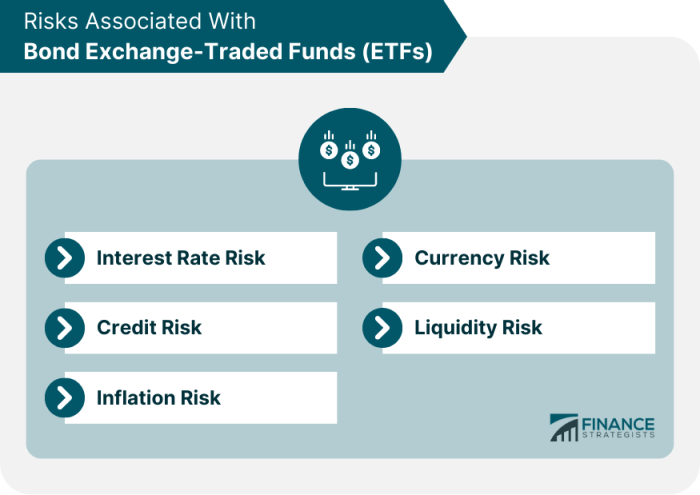
Investing in Bond ETFs carries certain risks that investors should be aware of in order to make informed decisions. These risks include interest rate risk and credit risk, among others. Additionally, market conditions can have a significant impact on the value of Bond ETFs, making it crucial for investors to understand how these factors can affect their investments. Below, we will delve into these risks and considerations in more detail.
Interest Rate Risk
Interest rate risk is a key consideration when investing in Bond ETFs. As interest rates rise, bond prices tend to fall, and vice versa. This inverse relationship can impact the value of a Bond ETF, potentially leading to losses for investors. To mitigate this risk, investors can consider diversifying their portfolios across different types of bonds with varying maturities.
Credit Risk
Credit risk refers to the risk of a bond issuer defaulting on its payments. Bond ETFs that invest in lower-quality or high-yield bonds are more susceptible to credit risk. Investors can reduce this risk by investing in Bond ETFs with higher credit ratings or by diversifying their holdings across various issuers.
Market Conditions
Market conditions, such as economic indicators, geopolitical events, and changes in investor sentiment, can impact the value of Bond ETFs. For instance, during periods of economic uncertainty, investors may flock to safe-haven assets like government bonds, causing prices to rise. To navigate market volatility, investors can adopt a long-term investment approach and regularly review their portfolios to ensure alignment with their financial goals.
Strategies for Mitigating Risks
When investing in Bond ETFs, investors can employ several strategies to mitigate risks, including diversification, asset allocation, and periodic rebalancing. By spreading investments across different bond types and maturities, investors can reduce exposure to specific risks. Additionally, maintaining a balanced asset allocation and periodically rebalancing the portfolio can help manage risk and optimize returns over time.
Bond Investment Strategies
Investors have various strategies to consider when incorporating Bond ETFs into their portfolio. Bond ETFs can be utilized for diversification within an investment portfolio, providing a range of benefits to investors seeking exposure to the bond market.
Diversification with Bond ETFs
Bond ETFs offer investors the opportunity to diversify their portfolio by gaining exposure to a wide range of bonds with different maturities, credit qualities, and issuers. By investing in Bond ETFs, investors can spread their risk across various bond holdings, reducing the impact of volatility in any single bond or sector.
- Investors can use Bond ETFs to access different sectors of the bond market, such as government bonds, corporate bonds, municipal bonds, and high-yield bonds, allowing for broader diversification.
- Bond ETFs can also provide exposure to bonds with varying durations, helping investors manage interest rate risk in their portfolio.
- By investing in Bond ETFs with different credit qualities, investors can adjust the risk-return profile of their portfolio according to their risk tolerance and investment objectives.
Ideal Investment Scenarios for Bond ETFs
Bond ETFs are an ideal investment choice in various scenarios, depending on an investor’s goals and risk appetite.
- Investors seeking regular income can benefit from Bond ETFs, as they typically offer attractive yields compared to traditional savings accounts or CDs.
- During periods of market volatility or economic uncertainty, Bond ETFs can serve as a safe haven investment, providing stability and income to investors.
- For investors looking to balance the risk in their equity-heavy portfolio, adding Bond ETFs can help reduce overall portfolio volatility and provide downside protection.
In conclusion, Bond ETFs offer a diverse range of opportunities for investors looking to diversify their portfolios and potentially enhance their returns in the ever-evolving market landscape.
FAQ
What are the key benefits of investing in Bond ETFs?
Investing in Bond ETFs provides diversification, liquidity, and ease of trading compared to individual bonds.
How can investors mitigate risks when investing in Bond ETFs?
Investors can mitigate risks by diversifying their Bond ETF holdings, understanding the underlying assets, and monitoring market conditions regularly.