With Bond laddering strategy for investors at the forefront, this paragraph opens a window to an amazing start and intrigue, inviting readers to embark on a storytelling journey filled with unexpected twists and insights.
Understanding the concept of bond laddering and its benefits can pave the way for smart investment decisions.
Bond Laddering Strategy for Investors
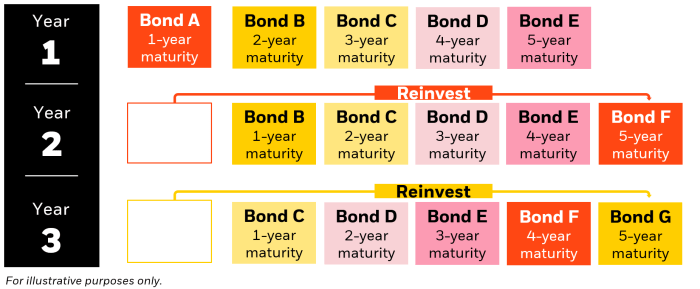
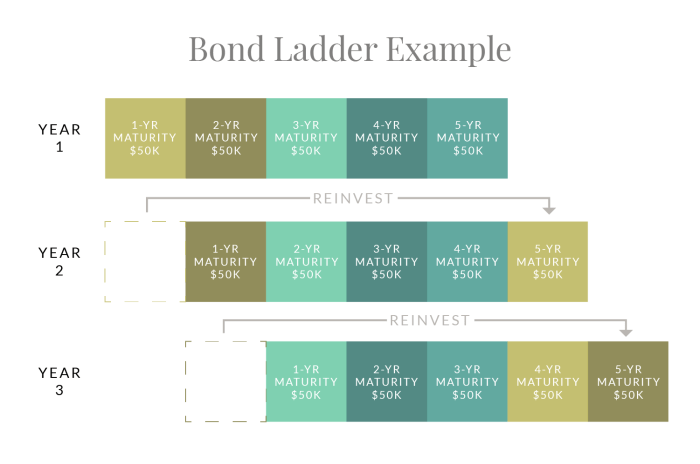
A bond laddering strategy involves investing in a diversified portfolio of bonds with staggered maturity dates. The strategy works by spreading out investments across different bond maturities, typically ranging from short-term to long-term.
Benefits of Bond Laddering Strategy
- Diversification: By investing in bonds with varying maturity dates, investors can reduce the impact of interest rate fluctuations on their overall portfolio.
- Regular Income: Bond laddering provides a steady stream of income as bonds mature at different intervals, allowing investors to reinvest or use the funds as needed.
- Flexibility: Investors have the flexibility to adjust their bond ladder based on changing market conditions or investment goals.
- Risk Management: The staggered maturities in a bond ladder help mitigate reinvestment risk and provide a more predictable cash flow.
Risks of Bond Laddering Strategy
- Interest Rate Risk: Fluctuations in interest rates can impact the value of bonds in the ladder, especially if rates rise significantly.
- Inflation Risk: The purchasing power of bond coupon payments and principal may be eroded by inflation over time.
- Credit Risk: Bonds in the ladder issued by lower-rated entities may be subject to default risk, affecting overall returns.
- Liquidity Risk: Selling bonds before maturity in a rising interest rate environment could result in losses or limited marketability.
BOND INVESTMENT
Investing in bonds involves lending money to a government or corporation in exchange for periodic interest payments and the return of the initial investment at the bond’s maturity date. This type of investment differs from stocks, where investors own a share of the company, as bondholders are creditors and do not have ownership rights.
Key Factors to Consider Before Investing in Bonds
Before investing in bonds, investors should consider the following key factors:
- Interest Rate Environment: Changes in interest rates can affect bond prices and yields.
- Credit Quality: The credit rating of the issuer determines the risk of default.
- Maturity: Short-term bonds have lower interest rate risk, while long-term bonds offer higher yields.
- Tax Considerations: Tax implications can vary based on the type of bond and the investor’s tax bracket.
- Market Conditions: Supply and demand dynamics in the bond market can impact prices.
Types of Bonds and Risk-Return Profiles
There are several types of bonds available for investment, each with its own risk-return profile:
Government Bonds: Issued by governments to finance public spending, these bonds are considered low-risk due to the backing of the government.
Corporate Bonds: Issued by corporations to raise capital, these bonds offer higher yields but come with higher default risk compared to government bonds.
Municipal Bonds: Issued by state and local governments to fund public projects, these bonds offer tax advantages for investors in higher tax brackets.
High-Yield Bonds: Also known as junk bonds, these bonds are issued by companies with lower credit ratings and offer higher yields to compensate for the increased risk of default.
In conclusion, the bond laddering strategy offers investors a structured approach to optimize returns while managing risks effectively. Dive into this strategy and elevate your investment game.
Helpful Answers
What is the main idea behind bond laddering?
The main idea is to stagger bond investments with different maturities to spread out risk and take advantage of varying interest rates.
How can investors benefit from using a bond laddering strategy?
Investors can benefit from steady income streams, reduced interest rate risk, and the ability to reinvest matured bonds at higher rates.
What are the risks associated with implementing a bond laddering strategy?
Risks include potential changes in interest rates affecting reinvestment opportunities, inflation risks, and the risk of default by bond issuers.